


Some entry-level engine test stands on the market look like they were slapped together with scraps of bent sheet metal. They flex under heavy throttle, vibrate across the bench, and—worst of all—use threads tapped directly into soft anodized aluminum. These test stands will not survive after a few engine break-in sessions.
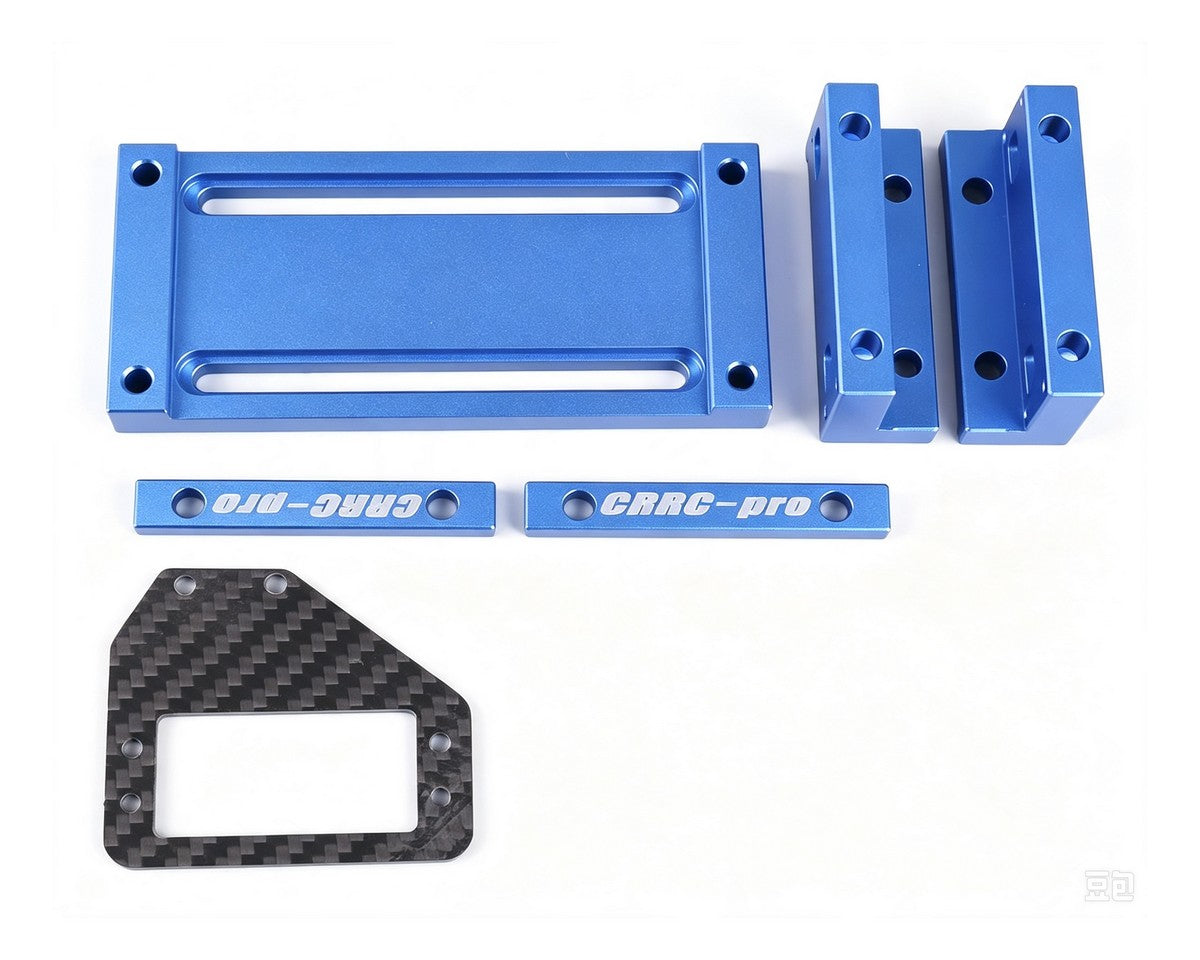
The Pro CNC Engine Test Rig was e milled from a solid block aluminum in an anodized blue finish, this rig is built to be a buy-it-once lifetime tool for your workshop. Its has zero tapped threads in the aluminum body. Every single mounting point uses heavy-duty steel pass-through bolts, washers, and independent nuts. If you ever over-tighten or wear out a screw after years of hard pit use, you swap in a $0.10 steel bolt from your field box—the main structural alloy stays literally forever.
Designed with precision guide tracks to keep L-brackets aligned, anti-vibration spring washers, an integrated 3K carbon fiber throttle servo mounting plate, and custom 3M hook-and-loop tape for your fuel tank setup, this is the definitive pit stand for intermediate builders, scale aviators, and glow-plug purists who demand machine-shop precision when setting up a fresh OS engine or other high-performance rc engine.
6 Key Features
-
Solid Billet Machined Baseplate: Milled from a heavy solid block of CNC aluminum alloy (not flimsy bent sheet) to absorb vibration and remain rock-solid on the bench.
-
Zero Tapped Aluminum Threads: All frame components utilize steel pass-through bolts and nuts—completely eliminates stripped threads in aluminum for lifetime durability.
-
Interlocking Alignment Tracks: Precision slots on the baseplate keep the L-mounting brackets perfectly parallel during adjustments, preventing crankcase twist.
-
3K Carbon Fiber Throttle Servo Mount: Includes a dedicated carbon plate with a 4.3 cm x 2.2 cm cutout, allowing direct mechanical throttle servo control right on the stand.
-
Vibration-Proof Hardware Package: Engine clamping blocks utilize spring washers and flat washers to stop bolts from loosening under high RPM heat cycles.
-
Complete Bench Station Kit: Includes high-tack 3M double-sided hook-and-loop tape to secure your receiver, battery, and fuel tank directly alongside the stand.
Specification List
-
Material: Solid-Block CNC Aluminum Alloy & 3K Carbon Fiber
-
Finish: Anodized Blue
-
Baseplate Design: Solid Billet Milled Frame with Sliding Locknut Capture Channels
-
Servo Plate Cutout Dimensions: 43 mm x 22 mm (Standard Servo Size)
-
Hardware Type: High-Tensile Pass-Through Hex Screws, Steel Locknuts, Flat & Spring Washers
-
Maximum Rail Adjustment Width: Approx. 55 mm
-
Compatible Engine Types: Beam-mount / Side-lug glow engine and nitro engine models (.06 to 1.60 class)
-
Included Mounting Accessories: Carbon Fiber Servo Plate, 3M Self-Adhesive Hook-and-Loop Sheet
Gasoline Standoff Engine Limitation: The cutout on the carbon servo plate is designed for standard throttle servos. While beam-mounted gas engines fit, large gasoline engines requiring rear standoff mounts (e.g., DLE 30/35/55) are not directly compatible without custom standoff adapter plates.
What's in the Box
-
1x Solid CNC Billet Aluminum Base Block (Blue)
-
2x CNC L-Shaped Main Mounting Brackets (Blue)
-
2x Upper Engine Clamping Bars with CRRC-pro Etching (Blue)
-
1x CNC Carbon Fiber Servo Mount Plate (4.3 cm x 2.2 cm Cutout)
-
1x Sheet 3M Heavy-Duty Self-Adhesive Hook-and-Loop (Velcro) Tape
-
1x Heavy-Duty Pass-Through Screw, Washer & Locknut Hardware Set
-
4x Self-Tapping Bench Fasteners
-
1x L-Shaped Hex Allen Wrench
Required to Run (Not Included)
-
1x Standard Size Servo for throttle control (e.g., Futaba S3003, Mayatech 1268, MG996R)
- Screwdriver / drill
- Sturdy wooden workbench or portable test table
- The engine that you wanted to test and related power setup
-
Safety glasses & ear protection
Compatible Engine Sizes Explained ("06–160 Class")
| Engine Class / Displacement | Cubic Capacity (cc) | Real-World Popular Engine Examples |
| .06 – .15 Class (Small Glow) | 1.0cc – 2.5cc | O.S. Max .12 / .15 CV-R, Cox .049/.051, ASP .15 |
| .21 – .32 Class (1/8 Nitro Buggy/Truggy) | 3.5cc – 5.2cc | O.S. Speed B2104, Force .21, Nitro Star .28 |
| .40 – .55 Class (Standard RC Plane Engine) | 6.5cc – 9.0cc | O.S. 46AX, O.S. 55AX (shown in product photo), Evolution .46 |
| .60 – .91 Class (Sport & Scale Plane) | 10.0cc – 15.0cc | O.S. 61FX, O.S. 91FX, Saito FA-82 / FA-91 4-Stroke |
| 1.20 – 1.60 Class (Large Glow) | 20.0cc – 26.0cc | O.S. 120AX, O.S. 160FX, Enya 120 |
-
Fitment Check: Any side-lug / beam-mounted engine with a lower crankcase mounting width under 55 mm fits seamlessly on this rig.
Why You MUST Use a Dedicated Engine Test Rig
Running in a new glow engine or nitro engine directly on a finished RC airplane or car chassis is a recipe for heartbreak and mess. Here is why every serious glow aviator and engine tuner uses a bench engine rig:
-
Extreme Vibration & Thermal Cycles: Brand-new engines feature tight piston-to-sleeve tolerances (ABC/ABL pinch). The initial engine break-in process requires rich fuel mixtures, continuous heat cycling, and extended idle/mid-throttle runs. Subjecting a fragile balsa or composite airframe to hours of static bench vibration can fatigue glue joints, loosen control horns, and vibrate servo gears loose.
-
Mess Management: Rich break-in mixtures spew high volumes of unburnt oil and raw fuel out the exhaust. Doing this on an aircraft soaks the balsa firewall, ruins fresh iron-on film coverings, and leaves raw nitro residue inside wheel wells and radio bays.
-
Cooling & Accessibility: Tuning needle valves, checking head temperatures, and setting carburetor barrel stops is significantly safer and easier when the engine is rigidly mounted at eye level on a workbench, away from spinning airframe parts.
-
Reliability Before Flight: Conducting engine tuning on the ground ensures your RC plane engine holds a steady transition from idle to full throttle without leaning out or stalling—preventing dead-stick landings on maiden flights.