


Back in the golden era of model aviation, running in a brand-new glow engine involved bolting it to a random piece of 2x4 timber, clamping it to a picnic table with rusty C-clamps, and praying the vibration wouldn't send your carburetor flying. While that rough-and-ready approach built character (and soaked many a workbench in castor oil), modern high-precision nitro engine builds demand a far more stable setup.
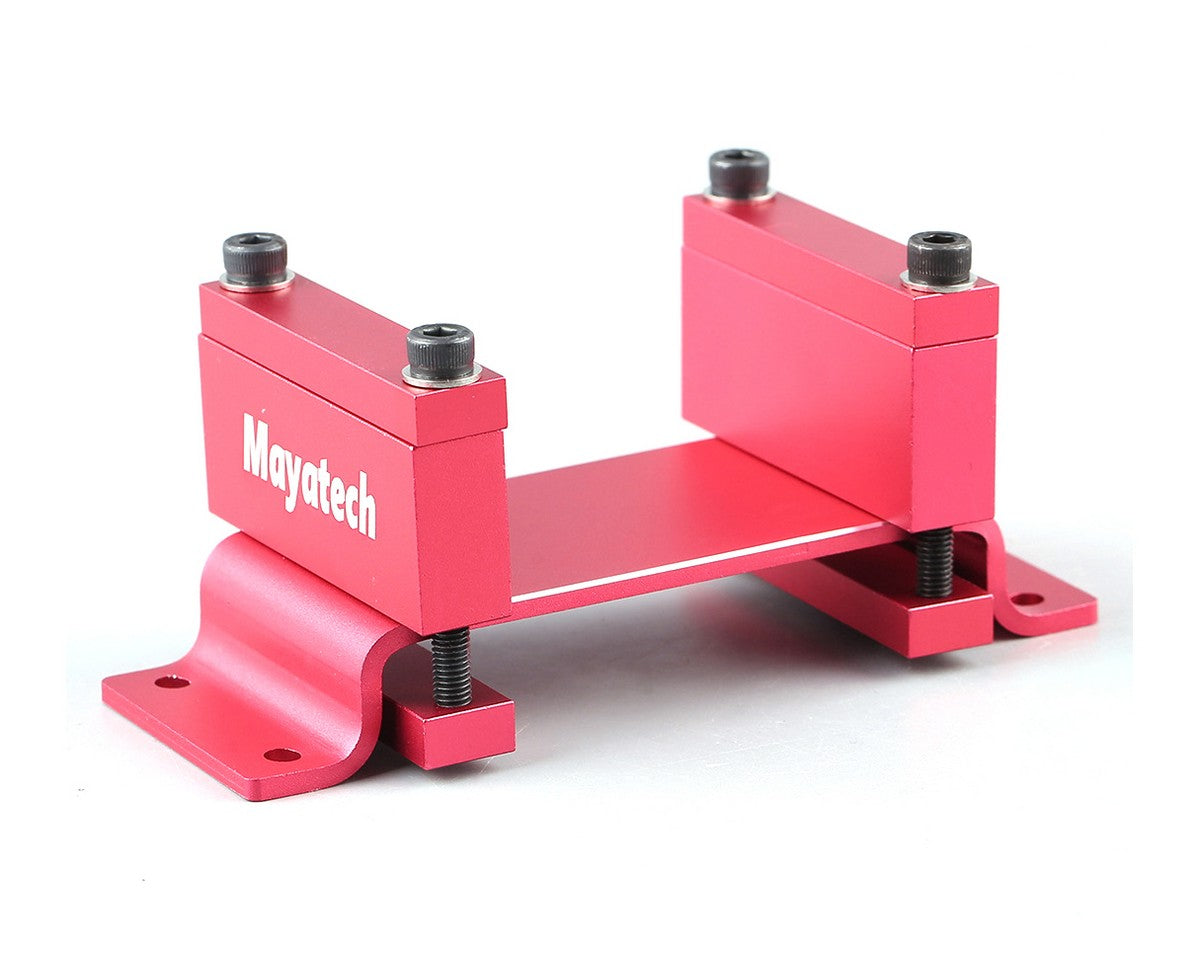
The Mayatech CNC Anodized Aluminum Engine Rig brings proper machine-shop precision to your pit table. Precision-machined from aircraft-grade alloy in high-visibility anodized red, this bench setup holds your engine firmly while you perform crucial engine break-in cycles, needle valve adjustments, and idle carb setups. By handling the messy break-in process on a dedicated test stand, you protect your airframe from harsh engine vibrations, raw fuel spills, and oil saturation.
Whether you are a seasoned glow-plug head, a scale builder fine-tuning a fresh OS engine, or a nitro beginner looking to learn needle tuning without risking an airframe on its maiden flight, this adjustable rig is an indispensable workshop tool.
- Gasoline Engine Warning: While listings often claim compatibility with small gas engines, this stand is designed specifically for beam-mounted crankcases. Gasoline engines requiring rear standoff mounts (e.g., DLE 30/35/55) or radial mounts will not fit without custom adapter plates.
- Engine shown in photos is for display purposes only and is sold separately).
6 Key Features
-
Precision CNC Machined Alloy: Cut from high-strength anodized T6 aluminum to resist engine flex, fuel corrosion, and high vibration levels during peak RPM runs.
-
Fully Adjustable Rail Width: Sliding dual-stage clamping blocks adjust up to a 55mm mounting width to accommodate a wide variety of beam-mount crankcases.
-
Dual-Bar Engine Clamping: Top and bottom plate clamping system grips the engine mounting lugs securely without warping or stressing the crankcase.
-
Bench Bolt-Down Base: Pre-drilled wide footprint mounting baseplate allows secure fastening directly to your wooden workshop bench or heavy outdoor testing table.
-
Integrated Heat Sink Mass: Heavy alloy structure helps wick away excess heat during rich-running break-in cycles on static test setups.
-
Vibration-Isolated Rigidity: Holds carburetors and throttle linkages steady, allowing pinpoint high/low needle valve tuning and idle adjustments.
Specification List
-
Material: CNC-Machined Aluminum Alloy
-
Color: Anodized Red
-
Baseplate Dimensions: 130mcm (L) x 43 mm (W)
-
Clamping Block Length: 59 mm
-
Clamping Block Height (Main): 24 mm
-
Clamping Bar Height (Upper/Lower): 12 mm
-
Maximum Rail Adjustment Interval: 55 mm
-
Total Assembled Weight: Approx. 244 g (0.54 lbs)
-
Mounting Style: Beam-mount / Side-lug engine crankcases
-
Included Hardware: 4x M5x50 socket head screws, 4x M5 washers, 4x M4 self-tapping wood screws, 1x M4 Allen wrench
What's in the Box
-
1x Heavy-Duty Aluminum Bending Baseplate (Red)
-
2x CNC Main Engine Riser Blocks
-
2x Set of Upper and Lower Engine Clamping Bars
-
4x M5 x 50mm Socket Head Cap Screws
-
4x M5 Flat Washers
-
4x M4 Self-Tapping Bench Screws
-
1x M4 Hex Allen Wrench
Required to Run (Not Included)
-
Sturdy wooden workbench or portable test table
-
Screwdriver / drill
-
The engine that you wanted to test and related power setup
-
Safety glasses & ear protection
Compatible Engine Sizes Explained ("06–160 Class")
| Engine Class / Displacement | Cubic Capacity (cc) | Popular Example OS Engine & Model Examples |
| .06 – .15 Class (Micro / Small Glow) | 1.0cc – 2.5cc | O.S. Max .12 / .15 CV-R, COX .049/.051, ASP .15 |
| .21 – .32 Class (Standard Nitro Car / Buggy) | 3.5cc – 5.2cc | O.S. Speed B2104, Force .21, Nitro Star .28 |
| .40 – .55 Class (Mid-Size RC Plane Engine) | 6.5cc – 9.0cc | O.S. 46AX, O.S. 55AX (featured in product photo), Evolution .46 |
| .60 – .91 Class (Large Sport / Pattern Plane) | 10.0cc – 15.0cc | O.S. 61FX, O.S. 91FX, Saito FA-82/91 4-Stroke |
| 1.20 – 1.60 Class (Giant Scale Glow) | 20.0cc – 26.0cc | O.S. 120AX, O.S. 160FX, Enya 120 |
-
Rule of Thumb: If your rc engine has side mounting ears (beam mount) and the crankcase width between screw holes is under 55 mm, this test engine rig will clamp it tightly.
Why You MUST Use a Dedicated Engine Test Rig
Running in a new glow engine or nitro engine directly on a finished RC airplane or car chassis is a recipe for heartbreak and mess. Here is why every serious glow aviator and engine tuner uses a bench engine rig:
-
Extreme Vibration & Thermal Cycles: Brand-new engines feature tight piston-to-sleeve tolerances (ABC/ABL pinch). The initial engine break-in process requires rich fuel mixtures, continuous heat cycling, and extended idle/mid-throttle runs. Subjecting a fragile balsa or composite airframe to hours of static bench vibration can fatigue glue joints, loosen control horns, and vibrate servo gears loose.
-
Mess Management: Rich break-in mixtures spew high volumes of unburnt oil and raw fuel out the exhaust. Doing this on an aircraft soaks the balsa firewall, ruins fresh iron-on film coverings, and leaves raw nitro residue inside wheel wells and radio bays.
-
Cooling & Accessibility: Tuning needle valves, checking head temperatures, and setting carburetor barrel stops is significantly safer and easier when the engine is rigidly mounted at eye level on a workbench, away from spinning airframe parts.
-
Reliability Before Flight: Conducting engine tuning on the ground ensures your RC plane engine holds a steady transition from idle to full throttle without leaning out or stalling—preventing dead-stick landings on maiden flights.